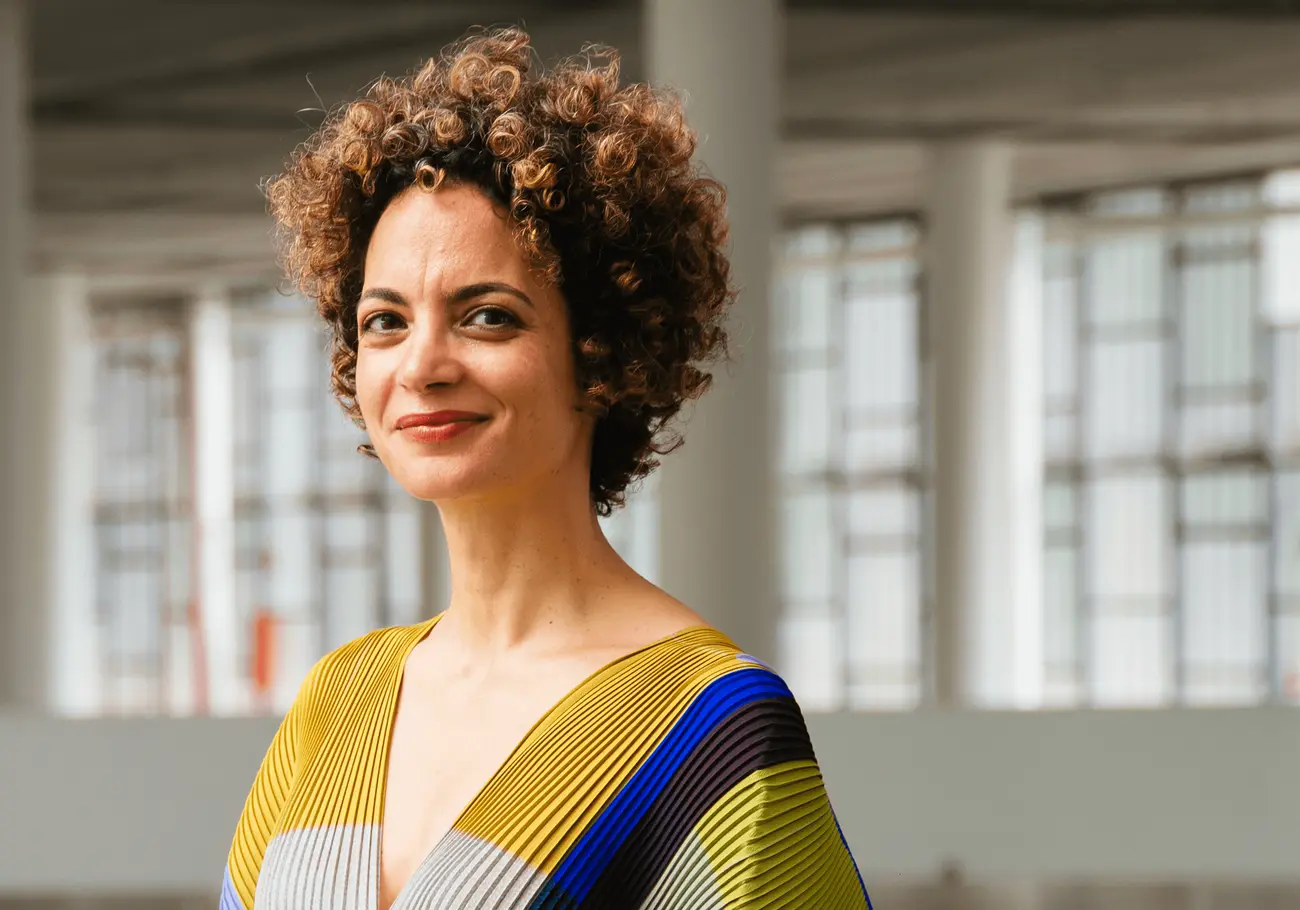





Alya Sebti
Collaboration with the 36th Bienal de São Paulo, one of the most important art exhibitions in Latin America, currently taking place at the Ciccillo Matarazzo Pavilion under the title “Not All Travellers Walk Roads – Of Humanity as Practice”, curated by Bonaventure Soh Bejeng Ndikung and his conceptual team.
Inspired by the poem “Da calma e do silêncio” by Conceição Evaristo, this edition invites us to rethink humanity as a verb — a living practice based on listening, coexistence, and the encounter between different worlds and voices.
In tune with this idea, Veneno and the Bienal come together for a series of mixes and sound selections created by the festival’s curatorial team, exploring sound as a space for reflection, convergence, and dialogue.
About the 36th Bienal de São Paulo
The 36th Bienal de São Paulo — Not All Travellers Walk Roads – Of Humanity as Practice — is held at the Ciccillo Matarazzo Pavilion in Ibirapuera Park (Gate 3), São Paulo.
The exhibition is free and open to the public from September 6, 2025, to January 11, 2026.
Curated by Bonaventure Soh Bejeng Ndikung, with co-curators Alya Sebti, Anna Roberta Goetz, Thiago de Paula Souza, co-curator at large Keyna Eleison, adjunct co-curators André Pitol and Leonardo Matsuhei, and strategy and communications advisor Henriette Gallus, the Bienal proposes to imagine humanity as a living practice — a space of encounter, listening, and negotiation between different worlds.
More information and the complete program at: 36.bienal.org.br
TRACKLIST
Third Selection: Alya Sebti
The series continues with a sound selection by Alya Sebti, curator and director of the ifa-Galerie in Berlin (Institut für Auslandsbeziehungen). She created the platform Untie to Tie, dedicated to exploring colonial legacies in contemporary societies. Since 2017, ifa-Galerie Berlin has been developing this transdisciplinary program with a focus on visual arts, performance, and education.
About the Selection, by Alya Sebti
Some songs are connected to the Invocation in Marrakech, such as those by Mourad Belouadi, a participant in that edition, along with traditional Gnawa music and the iconic tracks of Nass El Ghiwane. Others resonate with the Invocation in Guadeloupe, including Gwoka and Yo Vivirei, the unforgettable karaoke moment led by Lazaro Benitez. The song Maya became my feel-good anthem after we listened to it with many participants during the second Invocation.
Many tracks also come from collective listening moments within the conceptual team, especially works by Gilberto Gil and Caetano Veloso. Each song formed a special bond with Bonaventure, Thiago, Anna, Keyna, and André. We were fortunate to have a musician traveling with us: Leonardo Matsuhei, adjunct co-curator of this edition. His album, so calming and meditative, accompanied us throughout the trip. I’ve included one of his songs here.
The three songs by Tiganá stayed with me throughout the final month of preparation. I listened to them almost every day, turning this into a personal ritual. I discovered Tiganá through my colleague and friend Juliana Sampaio, and his music offered me a grounding and centering energy.
The song Boa Sorte holds a particularly meaningful story for me: back in 2014, it was my wake-up alarm, I listened to it every morning as I prepared for my very first biennale, the Marrakech Biennale. Hearing Vanessa da Mata again ten years later, in Brazil, while preparing for the most prestigious biennale in the world, felt like a beautiful clin d’œil from life, a reminder of its surprises and its beauty.
Finally, Mulatu Astatke (and, by extension, much of Ethiopian jazz) is a staple on my playlist, helping me stay focused as I write all the essays, texts, and interview preparations that shaped this incredible journey.
LISTEN