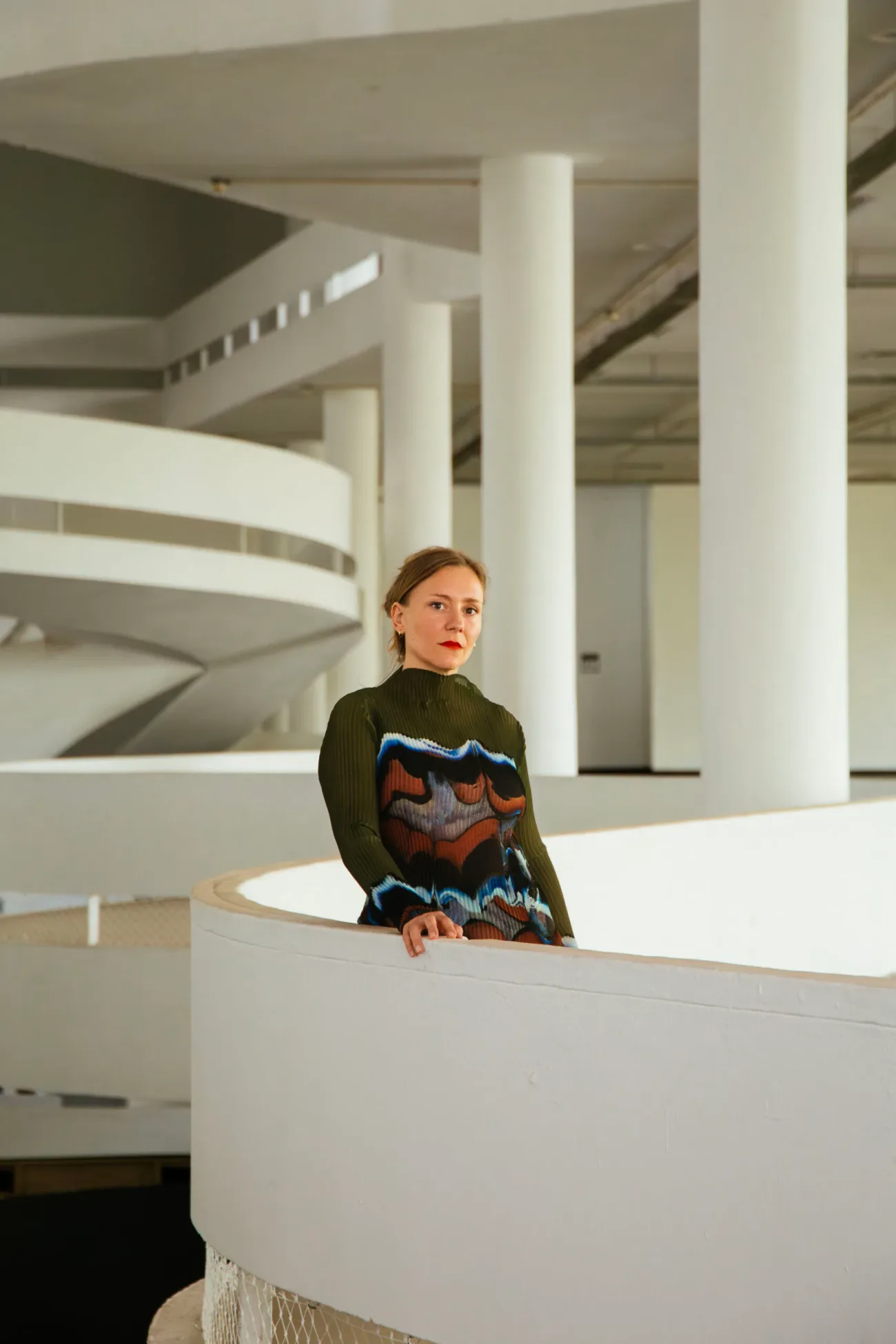





VENENO × 36ª BIENAL DE SÃO PAULO – Primeira Seleção: Anna Roberta Goetz
A Veneno inicia uma parceria com a 36ª Bienal de São Paulo, uma das mostras de arte mais importantes da América Latina, que acontece no Pavilhão Ciccillo Matarazzo sob o título “Nem todo viandante anda estradas – Da humanidade como prática”, com curadoria geral de Bonaventure Soh Bejeng Ndikung, acompanhado por sua equipe conceitual.
Inspirada no poema “Da calma e do silêncio” de Conceição Evaristo, esta edição propõe repensar a humanidade como verbo — uma prática viva baseada na escuta, na coexistência e no encontro entre mundos e vozes distintas.
Em sintonia com essa ideia, a Veneno e a Bienal se unem em uma série de mixes e seleções sonoras criadas pela equipe de curadoria da exposição, explorando o som como espaço de escuta, coexistência e encontro entre diferentes vozes e mundos.
A estreia dessa colaboração acontece na segunda-feira, 17 de novembro, às 14h, com a transmissão do primeiro set na programação da Veneno Radio.
Primeira Seleção: Anna Roberta Goetz
A série estreia com uma seleção sonora criada por Anna Roberta Goetz, curadora e pesquisadora que vive e trabalha entre a Suíça e o México. Seu trabalho investiga estratégias artísticas que desafiam hierarquias, narrativas e estruturas predominantes na sociedade.
Goetz atuou recentemente em instituições como o Museu Marta Herford e o MMK Museum für Moderne Kunst Frankfurt, além de ter colaborado com artistas como Rodney McMillian, Cinthia Marcelle, Banu Cennetoğlu, Ed Atkins, Laure Prouvost, Florian Hecker, Mathieu Kleyebe Abonnenc, Isa Genzken e Subodh Gupta.
Entre suas mostras mais recentes estão Long Gone, Still Here: Sound as Medium (Marta Herford, 2023), Genealogies in the Middle East and Latin America (Sharjah Art Foundation, 2021) e New Town Ghost (Kadist, 2021). Sob o título Casa Tomada, organizou também um extenso programa de exposições e performances na Cidade do México (2018).
Sobre a seleção, por Anna Roberta Goetz
Esta é uma coletânea de músicas que me fizeram companhia ao longo dos últimos meses. Algumas já faziam parte da minha biblioteca, enquanto outras chegaram nos últimos 18 meses por meio de experiências vividas com colegas e artistas.
Na última noite da Invocação em Guadalupe, por exemplo, Dory Sélèsprika e Anaïs Verspan tocaram MAYA, de P.LL, durante nossa festa improvisada em um restaurante — e essa música ficou comigo e com Alya Sebti desde então.
Ella, elle l’a, de France Gall, grudou em minha cabeça durante uma ida ao supermercado, numa manhã na última semana de montagem, e eu a coloquei para tocar no escritório logo depois, como um antídoto para o alto nível de tensão que estávamos vivendo. Várias pessoas da equipe começaram a cantar junto imediatamente.
Michael Kiwanuka já estava na minha biblioteca há algum tempo, mas depois de ouvir Manauara Clandestina cantar Cold Little Heart na abertura da 36ª Bienal de São Paulo, sempre vou associar a música àquela apresentação tão emocionante.
Gilberto Gil esteve presente de muitas formas ao longo dessa jornada, claro, mas Toda Menina Baiana ocupa um lugar especial para mim, desde que Lynhan Balatbat-Helbock a colocou para tocar na festa da semana de abertura. O clube inteiro — cheio de artistas da Bienal, membros da equipe da Fundação Bienal de São Paulo e muitos de nossos colaboradores, amigos e familiares que nos apoiaram nessa jornada — cantou e dançou junto com alegria. Foi um momento e uma lembrança profundamente emocionantes.
Sobre a 36ª Bienal de São Paulo
A 36ª Bienal de São Paulo — Nem todo viandante anda estradas – Da humanidade como prática — acontece no Pavilhão Ciccillo Matarazzo, no Parque Ibirapuera (Portão 3), em São Paulo.
A mostra é gratuita e aberta ao público de 6 de setembro de 2025 a 11 de janeiro de 2026.
Com curadoria de Bonaventure Soh Bejeng Ndikung, cocuradoria de Alya Sebti, Anna Roberta Goetz, Thiago de Paula Souza, cocuradoria at large de Keyna Eleison, cocuradoria adjunta de André Pitol e Leonardo Matsuhei e consultoria de comunicação
e estratégia de Henriette Gallus, a Bienal propõe imaginar a humanidade como prática viva — um espaço de encontros, escuta e negociações entre diferentes mundos.
Mais informações e programação completa em: 36.bienal.org.br
Veneno begins a collaboration with the 36th Bienal de São Paulo, one of the most important art exhibitions in Latin America, currently taking place at the Ciccillo Matarazzo Pavilion under the title “Not All Travellers Walk Roads – Of Humanity as Practice”, curated by Bonaventure Soh Bejeng Ndikung and his conceptual team.
Inspired by the poem “Da calma e do silêncio” by Conceição Evaristo, this edition invites us to rethink humanity as a verb — a living practice based on listening, coexistence, and the encounter between different worlds and voices.
In tune with this idea, Veneno and the Bienal come together for a series of mixes and sound selections created by the festival’s curatorial team, exploring sound as a space for reflection, convergence, and dialogue.
The collaboration debuts on Monday, November 17, at 2 p.m., with the broadcast of the first set on Veneno Radio.
First Selection: Anna Roberta Goetz
The series opens with a sound selection by Anna Roberta Goetz, a curator and researcher living and working between Switzerland and Mexico. Her work focuses on artistic strategies that challenge hierarchies, narratives, and dominant structures in society.
Goetz has recently worked with institutions such as the Marta Herford Museum and the MMK Museum für Moderne Kunst Frankfurt, and has collaborated with artists including Rodney McMillian, Cinthia Marcelle, Banu Cennetoğlu, Ed Atkins, Laure Prouvost, Florian Hecker, Mathieu Kleyebe Abonnenc, Isa Genzken, and Subodh Gupta.
Her most recent exhibitions include Long Gone, Still Here: Sound as Medium (Marta Herford, 2023), Genealogies in the Middle East and Latin America (Sharjah Art Foundation, 2021), and New Town Ghost (Kadist, 2021). Under the title Casa Tomada, she also organized an extensive program of exhibitions and performances in Mexico City (2018).
About the Selection, by Anna Roberta Goetz
This is a collection of songs that have kept me company over the past few months. Some were already part of my library, while others arrived over the last eighteen months through experiences shared with colleagues and artists.
On the last night of the Invocation in Guadeloupe, for example, Dory Sélèsprika and Anaïs Verspan played MAYA by P.LL during our improvised party at a restaurant — and that song has stayed with me and with Alya Sebti ever since.
Ella, elle l’a by France Gall got stuck in my head during a trip to the supermarket one morning in the final week of installation. I played it in the office right after as an antidote to the high level of tension we were living through, and several people from the team immediately started singing along.
Michael Kiwanuka had been in my library for some time, but after hearing Manauara Clandestina sing Cold Little Heart at the opening of the 36th Bienal de São Paulo, I’ll always associate the song with that moving performance.
Gilberto Gil was present in many ways throughout this journey, of course, but Toda Menina Baiana holds a special place for me, since Lynhan Balatbat-Helbock played it during the opening week’s party. The entire club — filled with Bienal artists, members of the Fundação Bienal de São Paulo team, and many of our collaborators, friends, and family who supported us along the way — sang and danced together with joy. It was a deeply moving moment and memory.
About the 36th Bienal de São Paulo
The 36th Bienal de São Paulo — Not All Travellers Walk Roads – Of Humanity as Practice — is held at the Ciccillo Matarazzo Pavilion in Ibirapuera Park (Gate 3), São Paulo.
The exhibition is free and open to the public from September 6, 2025, to January 11, 2026.
Curated by Bonaventure Soh Bejeng Ndikung, with co-curators Alya Sebti, Anna Roberta Goetz, Thiago de Paula Souza, co-curator at large Keyna Eleison, adjunct co-curators André Pitol and Leonardo Matsuhei, and strategy and communications advisor Henriette Gallus, the Bienal proposes to imagine humanity as a living practice — a space of encounter, listening, and negotiation between different worlds.
More information and the complete program at: 36.bienal.org.br